
Podcast #93

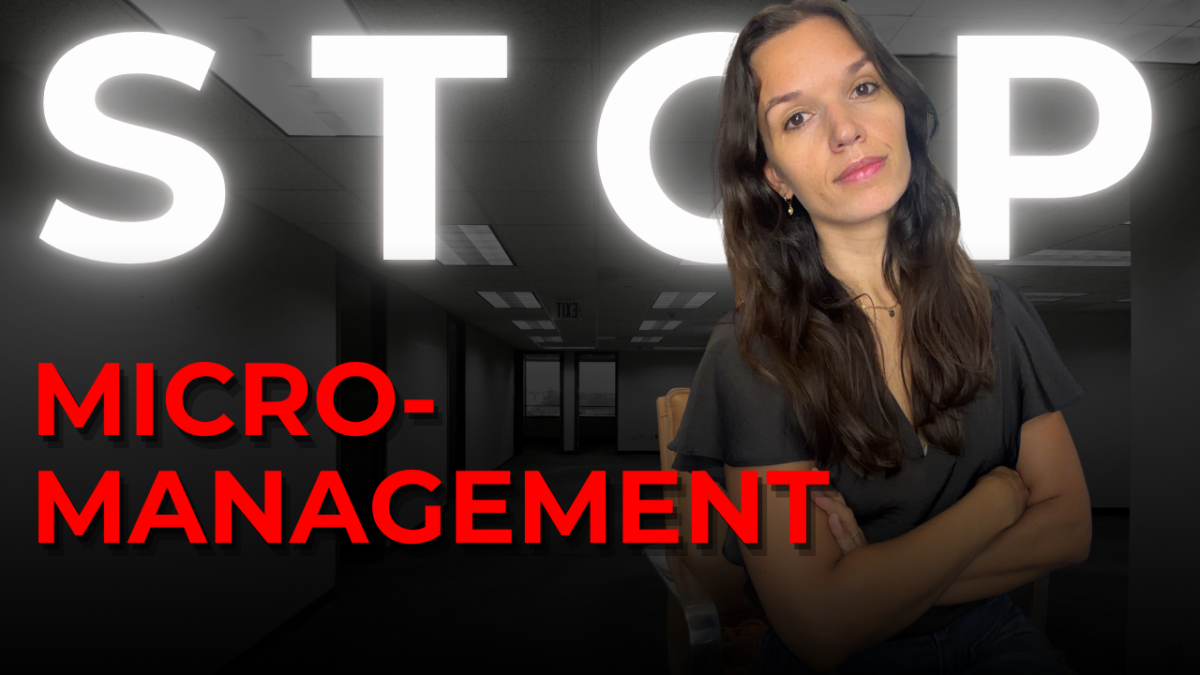
How to Deal With a Micromanaging Boss Without Starting a Power Fight.
If your micromanaging boss suddenly wants to know everything you are doing, every email you send, and every detail of your work, your first reaction may be: Can you just leave me alone?
For high performers, micromanagement can feel especially insulting. You were hired because of your knowledge and experience. You want the space to do your job.
But pushing back immediately may not get you the freedom you want.
Before you set hard boundaries or start a power fight, you need to understand why your boss is micromanaging you.
First, Find Out If They Micromanage Everyone.
Start by looking around.
Is your boss asking everyone for the same level of detail?
Or is it only you?
Look for someone on the team who gets more autonomy. Do they have more authority? More experience? A longer relationship with the manager?
Pay attention to how your boss communicates with different people. Look at team meetings, emails, projects, and decision-making.
The goal is to get an objective picture.
Do not immediately assume that someone else’s approach will work for you. Get curious. Make notes. Look for patterns.
If your boss is breathing down everyone’s neck, there is a good chance the problem has little to do with you.
Listen Now On Your Favorite Platform!
Is Your Boss New, Insecure, or Under Pressure?
Your manager may be new to the role. They may…
- …feel insecure,
- …be under more pressure than usual,
- …or even have a manager above them who is micromanaging them.
That last point matters.
Imagine your boss is constantly being asked for details by their own manager. If they do not know the answer, they may come straight to you.
It does not necessarily mean they think you are incompetent. They may simply be trying to protect themselves.
That does not make the micromanagement right. But understanding what is happening can help you choose a better strategy.
Do Not Try to Teach Your Manager a Lesson.
This is where high performers can get themselves into trouble.
You may want to push back or you may become less available. Give less information. Refuse requests. Tell your boss they need to trust you.
It feels like setting a boundary…
But you may also be creating a power fight.
Your manager still has authority over your feedback, reviews, promotions, and salary increases.
So ask yourself:
Do I actually need this battle right now?
You may be completely right about the situation. But being right does not automatically make a strategy useful.
The goal is not to win against your boss. The goal is to get more autonomy and create a better working dynamic.
Listen to the full episode!
Try a Two or Three Week Experiment.
Instead of immediately fighting the micromanagement, try something different.
For the next two or three weeks, depending on your situation, proactively give your boss the information they usually ask for.
- Send a quick update.
- Include them in an email when appropriate.
- Flag a problem before they discover it themselves.
- Give them enough information to feel informed.
The question you are really asking is:
What information does this person need in order to leave me alone?
This may sound counterintuitive.
But it can tell you a lot about the type of micromanaging boss you are dealing with.
Watch What Happens.
Once you start proactively sharing information, observe the response.
- Do they slowly back off?
- Do they become friendlier?
- Does trust increase?
- Do you start getting more freedom?
If yes, that tells you something important.
Your boss may not be trying to drive you crazy. They may simply be insecure or under pressure and looking for information that makes them feel safe.
In that situation, giving them what they need may actually create more autonomy for you.
And that is better than winning a boundary battle.
Listen to the full episode!
What If the Micromanagement Does Not Stop?
Now consider the other possibility.
- You provide the information,
- communicate proactively,
- show that you are an ally.
And your boss still keeps breathing down your neck…
They keep asking for more, keep checking everything, keep finding ways to control your work.
At that point, you may be looking at something different. It may not simply be a manager who needs more information.
It could be a toxic boss using micromanagement as a strategy.
That distinction matters because you need a different approach when the behavior is intentional and consistently harmful.
Why Does Micromanagement Bother You So Much?
There is another layer worth exploring.
Ask yourself:
- Why does this bother me this much?
- Does it immediately make you feel like your boss thinks you are incompetent?
- Do you interpret their questions as proof that they do not trust you?
- Do you immediately think they believe you are not smart enough or good enough?
If so, there may be something worth examining.
Perhaps you have experienced similar feelings before. Maybe authority figures have intruded on your space in ways that still affect how you respond today.
It does not have to be a major experience. The important question is whether the current situation is triggering a familiar reaction.
You can also ask: Why does this feel like an attack on my competence instead of recognition of how much I actually know?
That question can reveal a lot.
Use the Situation to Understand Yourself Better.
This is one of the bigger lessons from the episode.
Your reaction to a micromanaging boss can tell you something about yourself.
- Maybe you do not trust yourself as much as you think.
- Maybe you are highly sensitive to being questioned.
- Maybe you have a strong need to prove your competence.
- Maybe you are carrying an old reaction into a current workplace.
The goal is not to blame yourself. It is to understand what is happening so you have more choices in how you respond.
Map It Before You Act.
Before you go to war with a micromanaging boss, step back.
Ask:
- Does my boss micromanage everyone or just me?
- Is my boss new, insecure, or under pressure?
- Could their own manager be putting pressure on them?
- What information could I proactively provide?
- What happens if I do that consistently for two or three weeks?
- Does the micromanagement decrease?
- If it does not, am I dealing with a toxic boss using micromanagement as a tool?
- Why does this situation trigger me so strongly?
Write your answers down.
Create a map of the situation.
Then use the skills that made you a high performer in the first place.
Plan your next move.
The Goal Is More Autonomy, Not Victory.
- You do not have to prove that your boss is wrong.
- You do not have to win the power struggle.
- You need to understand the situation well enough to make a strategy that works for you.
Sometimes that means giving your manager more information… and sometimes it means recognizing that you are dealing with a toxic boss.
And then sometimes the most important work is understanding why the situation affects you so deeply.
Map the situation first. Then decide what to do.
Listen to the full episode!
Want to hear me go deeper into micromanagement, insecure managers, toxic bosses, and the two or three week experiment?
Disclaimer: This article and the linked podcast episode are for educational and informational purposes only and reflect general career coaching perspectives. Fela Rosa is a certified coach, not a licensed therapist, doctor, lawyer or financial advisor. Nothing here is legal, HR, medical, financial or mental health advice. If you’re going through a hard time with your mental or physical health, please reach out to a licensed healthcare professional. If you believe you’re experiencing discrimination, harassment, retaliation or other unlawful conduct, seek advice from a qualified professional. Read our full Disclaimer.
Listen to the Full Podcast
Listen to the full episode now on your favorite platform!
And if you’re ready to rebuild your self-trust, feeling and thinking calmly, and intentionally create your next career step, you can learn more about The Toxic Boss Reset HERE.
💬 Share your thoughts in the comments. Do you agree, disagree, or have something to add?
📩 Share this episode with someone who needs it.
About Corporate Warriors
Corporate Warriors helps high performers and leaders build career success without selling their soul.
Founded by Fela Rosa, a former tech high performer turned conscious career coach, the company guides professionals to break free from toxic workplaces, rebuild confidence, and create careers rooted in self-trust and alignment.
Follow @Corporate_Warriors on Instagram or visit corporatewarriors.io for more free tools, courses, and coaching resources.
Where are you right now?
Still stuck with a toxic boss?
Reclaim your power, even if you can’t quit (yet).
Already out of the toxic job?
You thought you’d finally be free. But you can’t stop thinking about it, and you feel like a broken version of yourself.